I thought I didn’t like soft pastels…
But after a recent landscape demonstration drawing I realised I needed to have a rethink. Here’s what I’ve discovered so far…
I've had these soft pastels for years. They've been languishing in a drawer unused and unloved, most of them given to me by students who didn't like them either. But I recently dug them out to do a quick demonstration of a snowy landscape for my weekly art class and was surprised by how quickly I could achieve results and how much I enjoyed them.
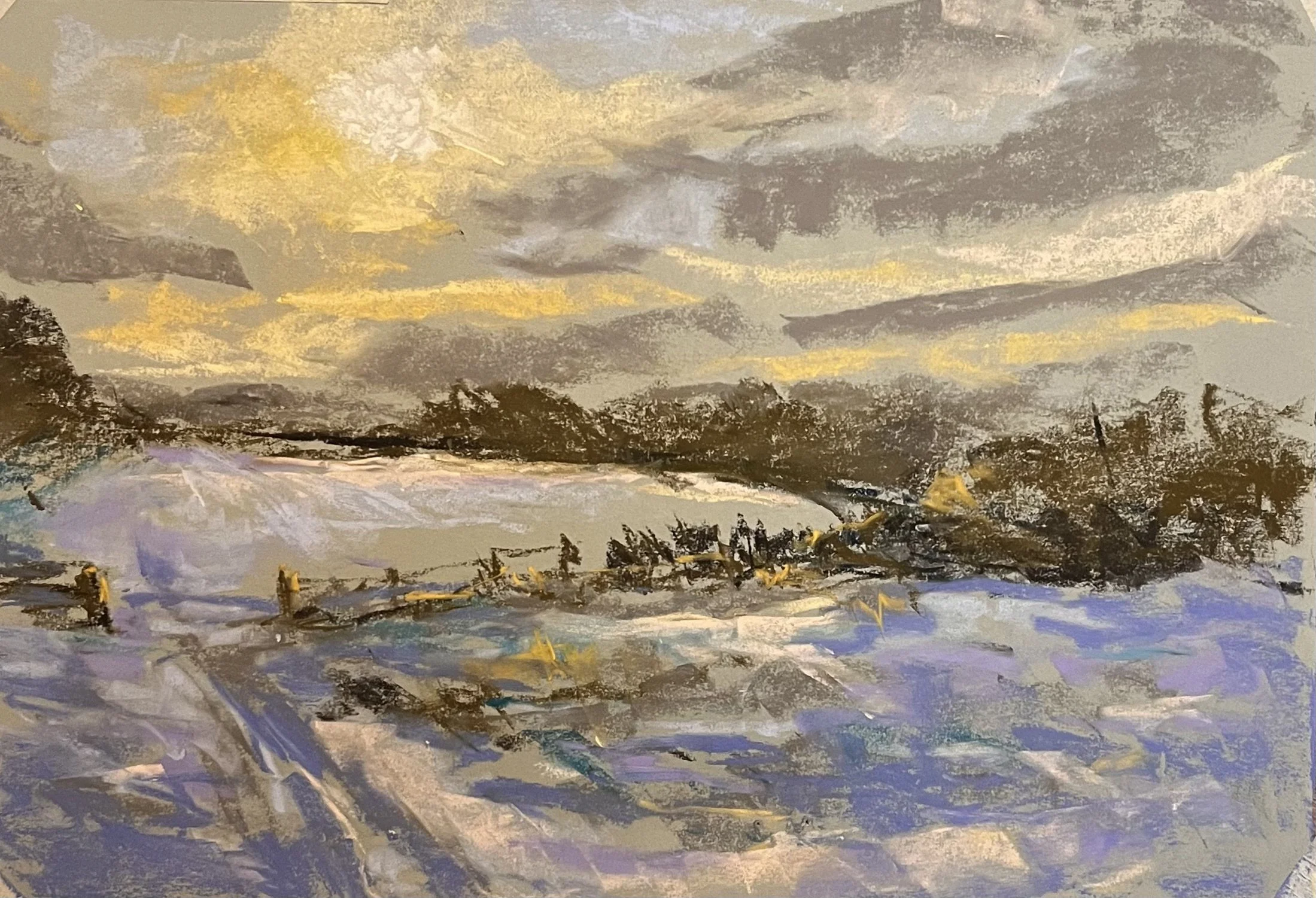
Winter Landscape with Snow
My demonstration drawing that reignited my interest in soft pastels
Soft pastels occupy an interesting spot between painting and drawing, being able to produce a drawn line as well as blocks and broad strokes of colour (people sometimes refer to ‘pastel paintings’ for this reason). They offer a range of mark-making effects and brilliance of colour that is quite unique and they lend themselves to mixed media work too. There are some disadvantages to them, but I’ll come back to those later.
These are all 'soft' pastels, sometimes called chalk pastels as they are made of pure pigment bound with clay or chalk. They are often bought in boxed sets but are also available as single sticks too. I have a mixture of entry level sets plus a few artists’ quality individual colours too.
Beginner quality pastels have less pigment and more binder in them, which can feel hard and gritty. Best quality pastels are intensely pigmented and feel soft and creamy to apply. I may well be investing in better quality pastels if this gets serious!
My random collection of loose pastels was casually thrown together in a box, don't do this! They all rub together and turn each other grey so you can't tell which colour is which. I wiped mine off with some kitchen towel but gently shuffling them in uncooked rice works well too.
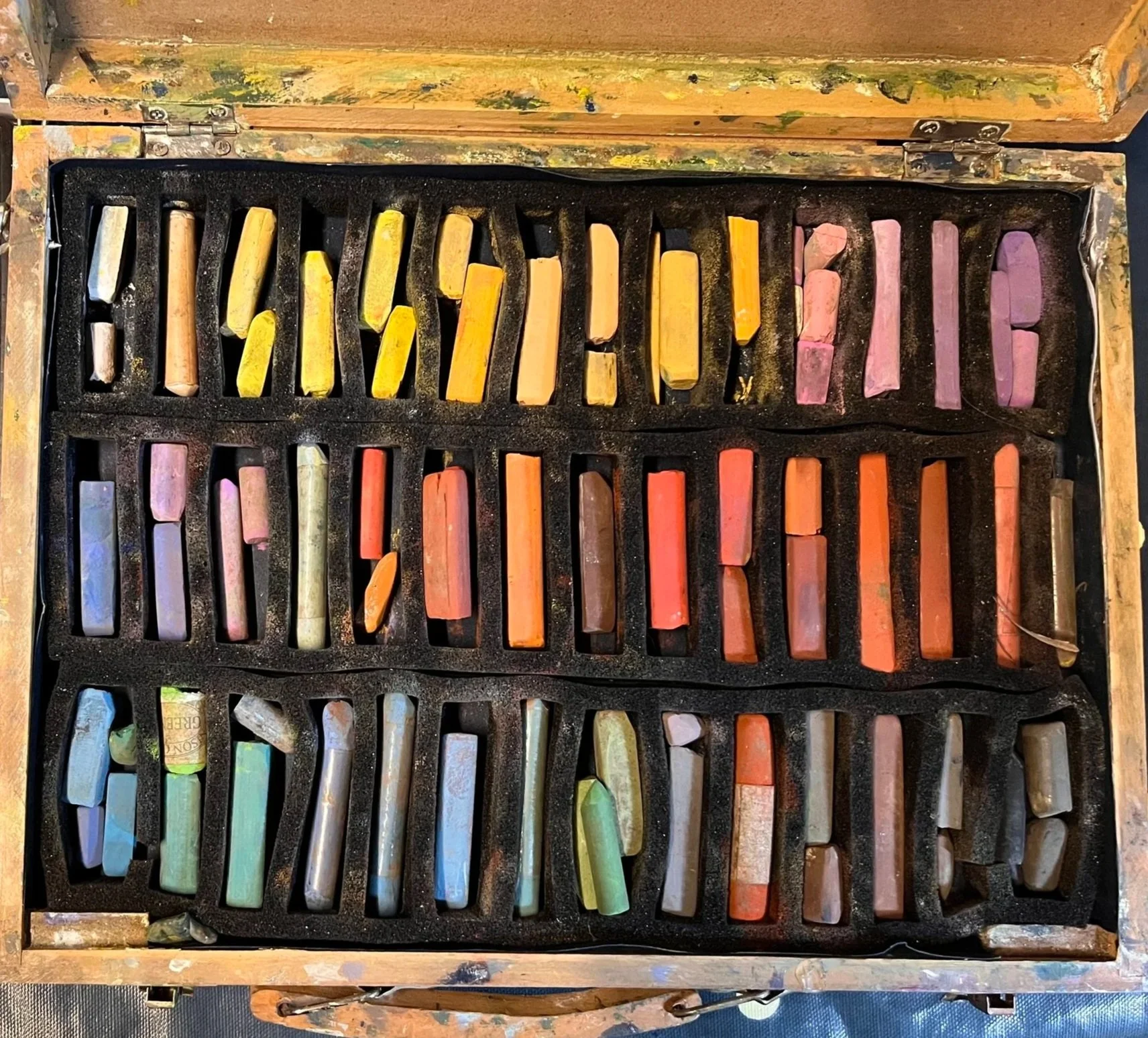
Freshly organised soft pastels
These foam inserts were perfect fit for this repurposed box
To solve my storage problems, I bought three foam inserts for pastel storage from Jackson's Art Supplies and repurposed my old home-made pochade box to store them in. This wooden box was originally a children's art kit and was perfect for this job but you could use any sturdy, shallow box with a well-fitting lid. To hold the pastels in place for transporting, I currently place a piece of cardboard over them until I can find some foam that will fit. I can’t help thinking that a well organised tray containing a rainbow of soft pastels is a thing of beauty in itself.
You don't need a huge number of pastels to start with, as you can layer and blend the colours on the paper, but it does make them more versatile if you do. A good selection of colours, including darker tones and neutral greys and browns, will enable you to describe subtle changes of tone and hue in your drawings. There are some really beautiful colours available but I would start with a student grade set to begin with and decide if they are something you will use often. Then you can gradually build up a range of good quality colours that you have selected yourself. Artists’ quality soft pastels have a very high pigment level and consequently are expensive to buy, so it makes sense to buy individual colours when you know exactly what you need.
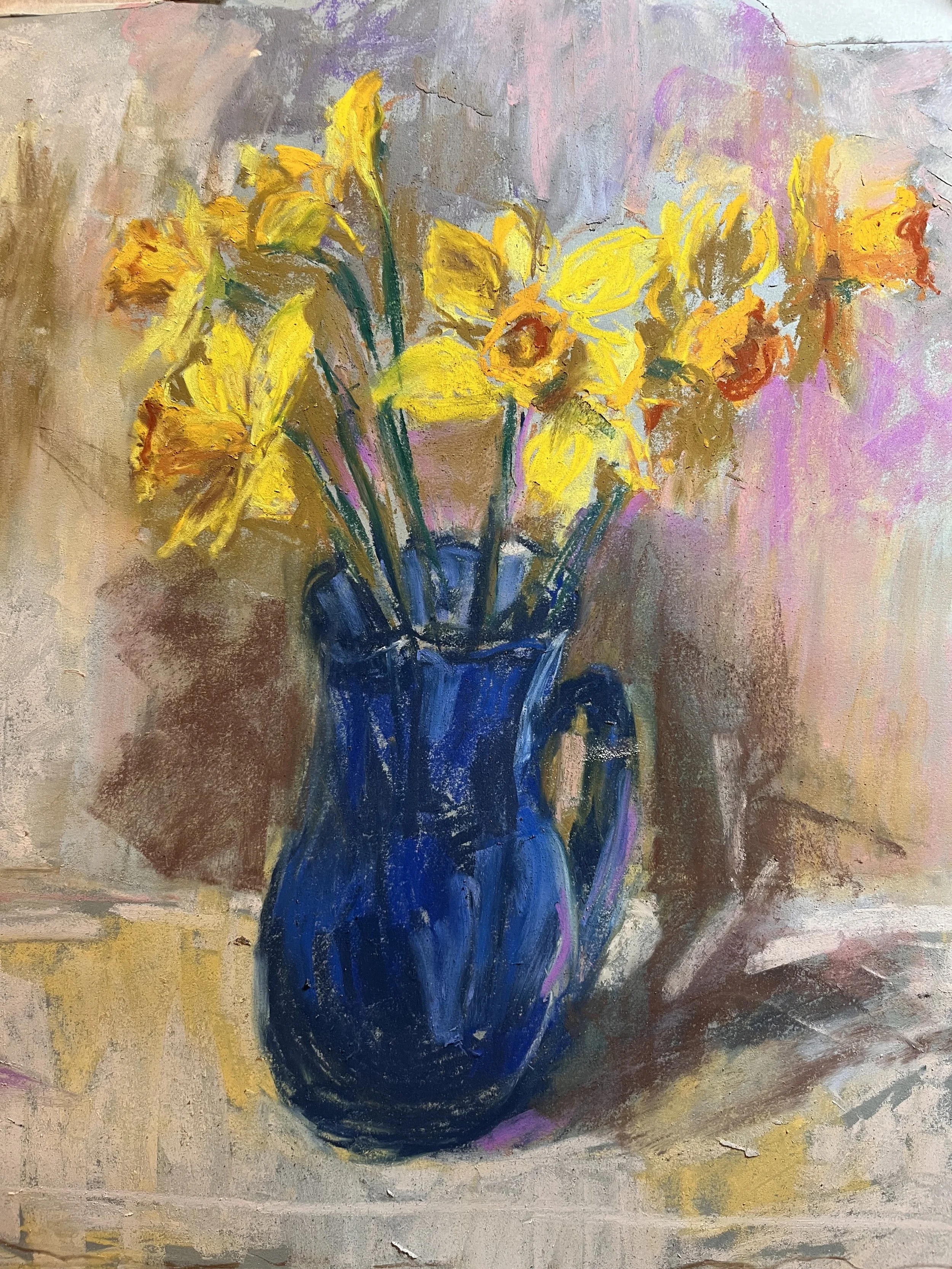
Discovering the depth of colour these pastels can create
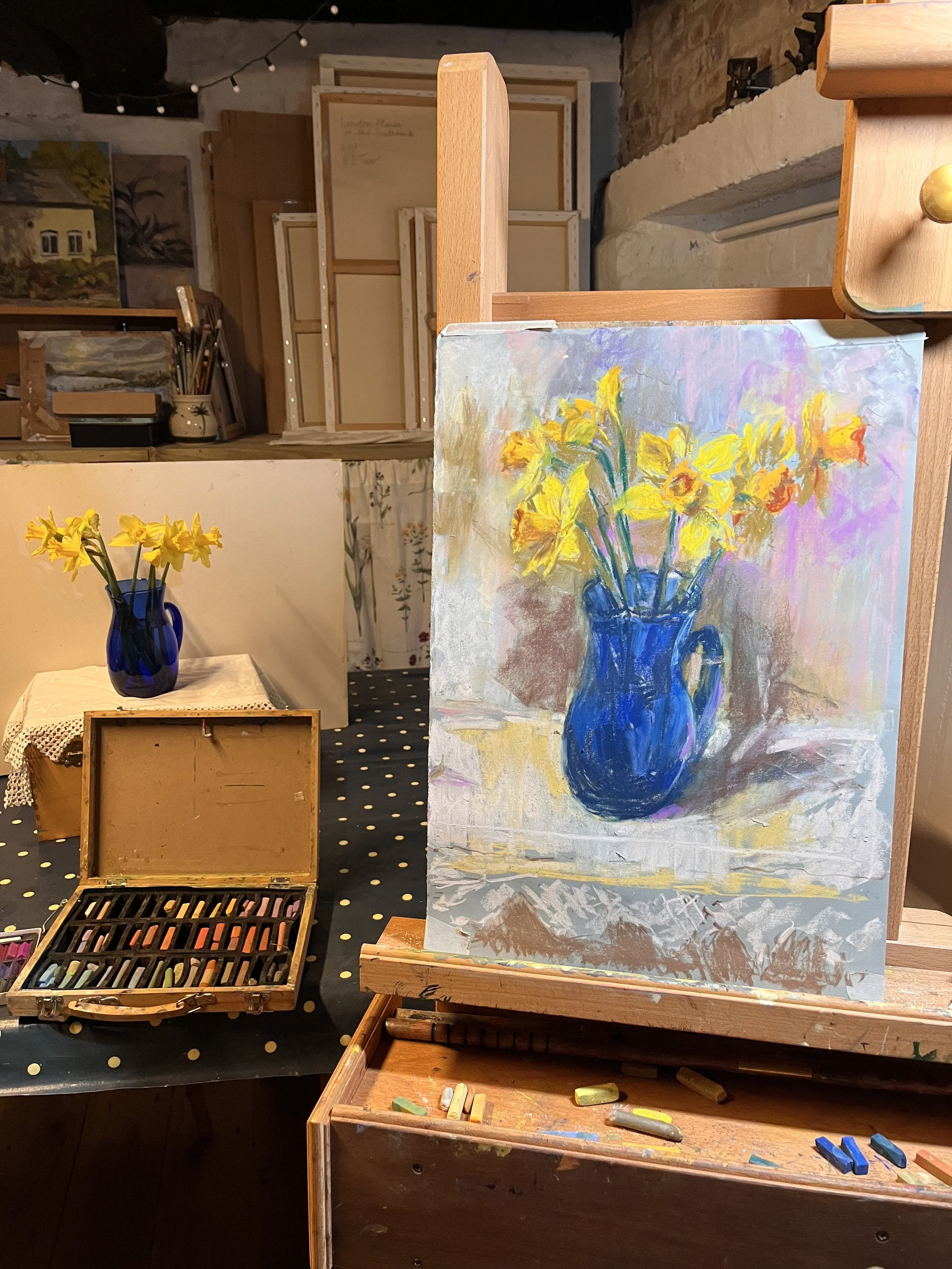
Soft pastels work especially well on coloured paper. Cheap sugar paper makes a good surface for practicing on as it comes in a range of colours and has some surface texture. This will quickly fade in sunlight so shouldn’t be used on work you wish to display. Good quality pastel paper is available which is acid free and light resistant, making it suitable for exhibiting. These specialist papers are available in a wide range of colours and weights with a heavier 'tooth' that can hold more pigment and take more layers. It was useful to be able to buy small quantities of coloured pastel papers from Jackson’s Art Supplies so that I can experiment and find which works best for me.
The velvety, powdery quality of soft pastels can be a problem if you want to draw fine details. One solution is to add details using pastel pencils, or to work bigger – this makes your marks relatively small to the scale of the image. For me it is the loose, Impressionistic, atmospheric quality of soft pastels that makes them so beautiful.
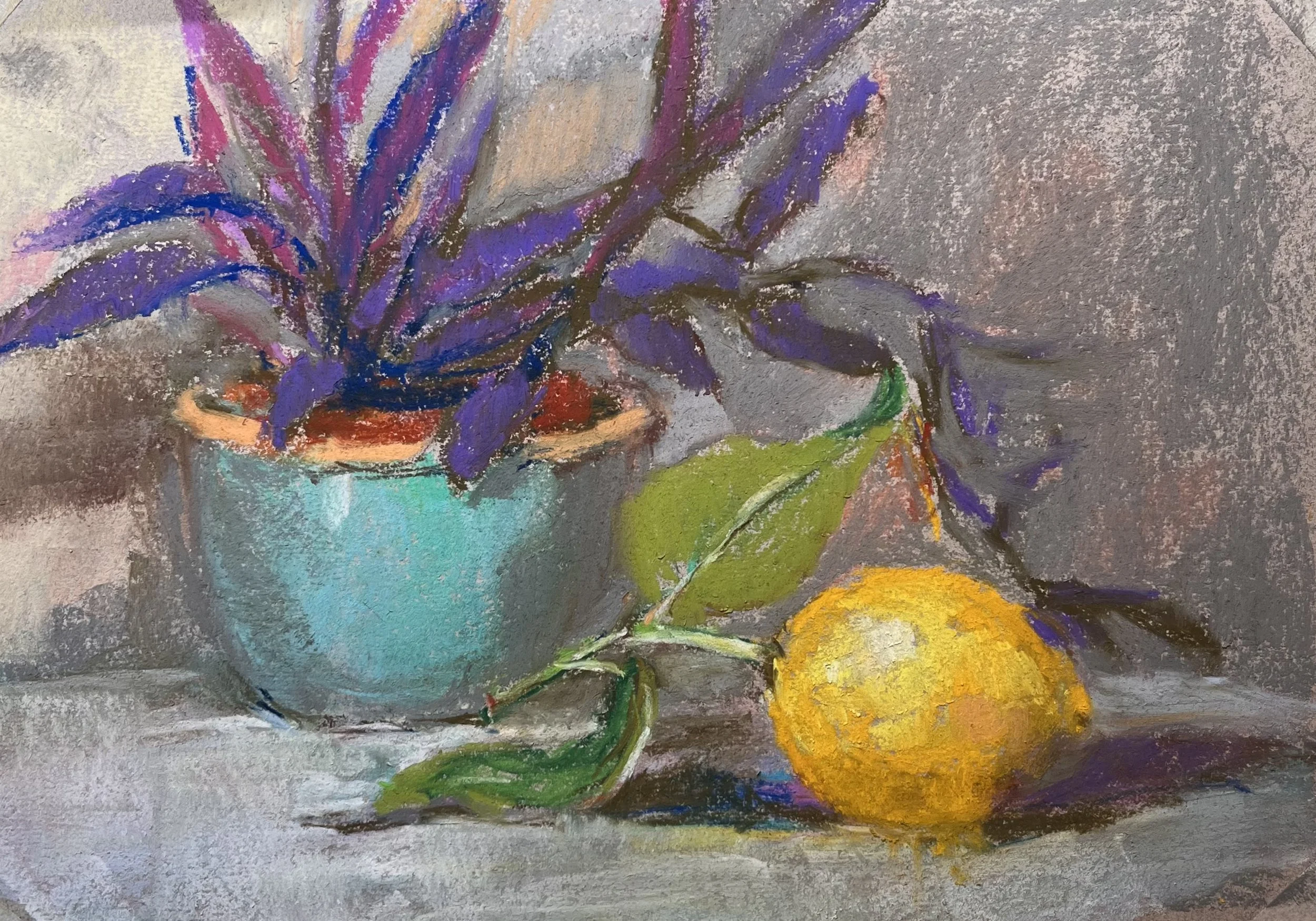
Still-life with Plant and Lemon
I love with how soft pastels can be both vibrant and subtle.
And finally, the down sides. These are the main reasons that put me off using soft pastels and the problems I have had to solve in getting used to them again.
Firstly, soft pastels are very dusty. It falls down the drawing as you work and your hands, clothes and easel will get covered in coloured dust very quickly. This is the probably the biggest problem cited by people who don’t like them; they are just so messy! As a lover of willow charcoal this is not a big problem for me, I wear an apron, wipe my fingers on kitchen roll from time to time and sweep, or better still vacuum, and wipe down my easel after use as the coloured dust will attach itself to everything I place on the easel afterwards if I don’t.
The soft and dusty quality also means your drawings will smudge easily when stored. I fix my pastel drawings with a light spray of fixative, which lays a thin layer of lacquer over the drawing to hold down the dust. I then store them in a simple portfolio with sheets of tissue paper between them. I will also tape sheets of pastel paper into my sketchbook so I can use pastels as part of my sketching practice. If you are very keen to preserve a favourite soft pastel drawing, it is best placed in a mount and framed with UV filtering exhibition glass and hung on the wall.
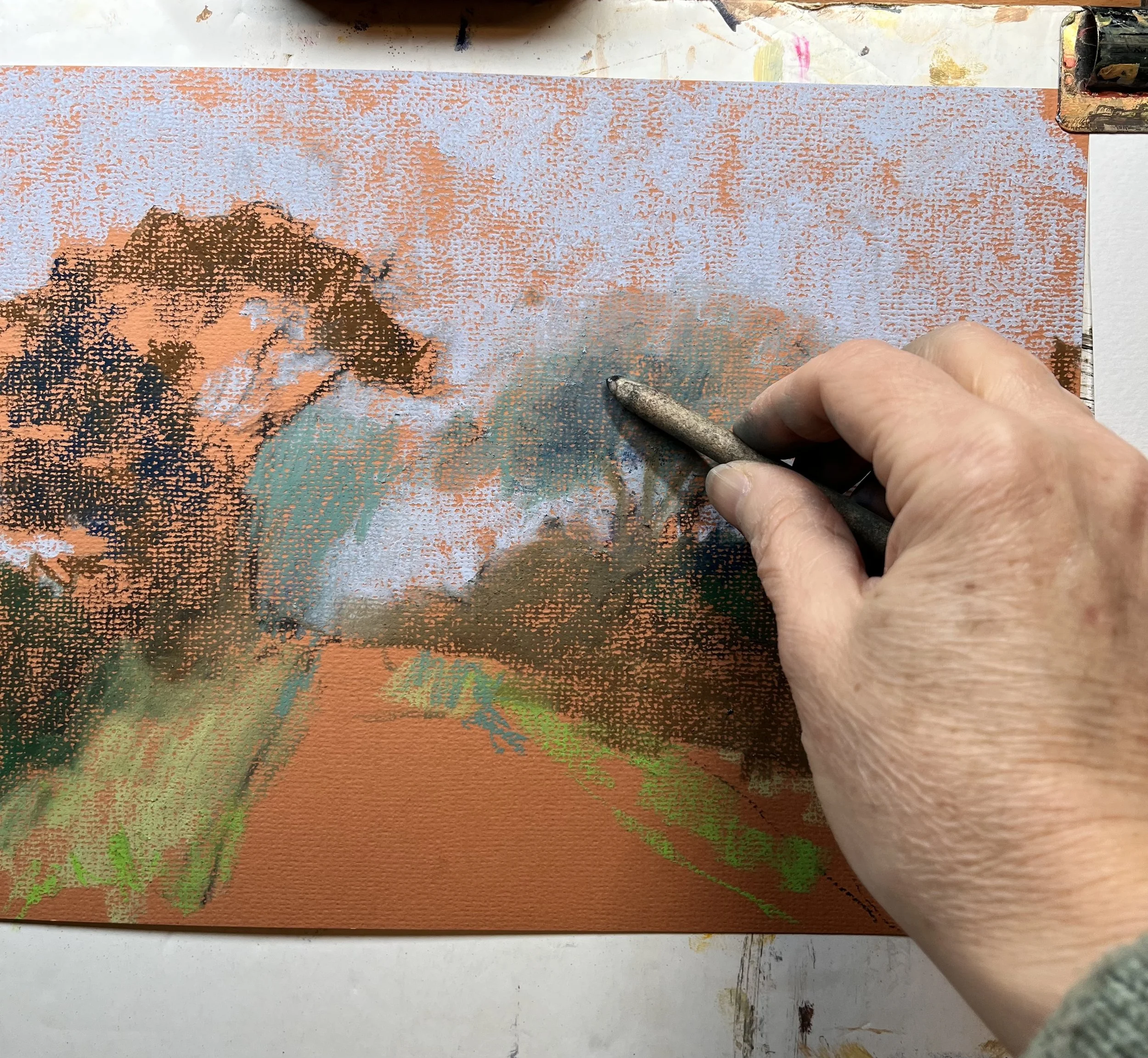
Work in progress
Using a blending stump to blend and soften the marks is a great way to create soft misty effects
Take care to always use fixative spray (hairspray also works if you can tolerate the smell) in a well-ventilated space. Spray from at least 12” back and cover the entire area of the drawing just once. Purists dislike fixing soft pastel drawings as it is thought to blur and darken the marks, but I think the benefits outweigh these issues. You can also fix your drawings in progress to allow you to add layers of colour over previous layers or to work on them over several sessions, fixing at the end of each session.
I have much more to discover about soft pastels and am keen to see how I get on with them outside in the landscape. I love the challenge of an unfamiliar medium, it keeps your hand and mind keen and can open up all sorts of creative possibilities. Follow me on Instagram and Facebook to see how this journey progresses.
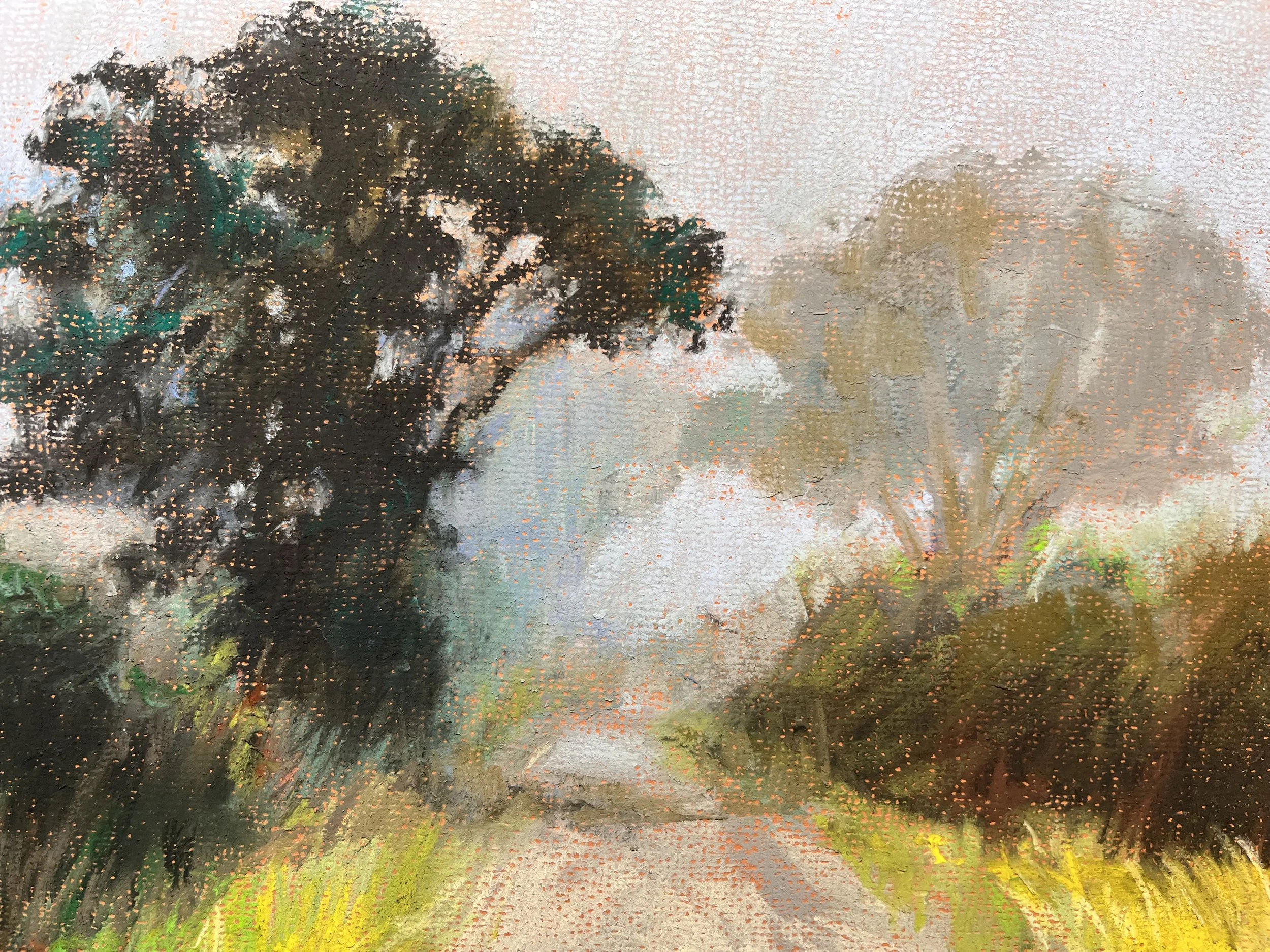
Sea Mist, Anglesey
This landscape is from a photograph I took in Anglesey last year. I’m looking forward to taking my pastels outside to work outdoors soon.
My materials:
Foam Dividers by Jackson’s Art Online
Soft Pastels: Inscribe, Daler Rowney Professional, a few Unison Colour plus many old odd others
Fixative: Jackson’s Pastel Fixative
Pastel Paper: Hahnemuhle Lana Colours sold as A4 single sheets
Blending stump: Jackson’s own brand